Nashville Neighborhood Guide: Where to Stay, Eat, and Explore in Every District
Nashville sprawls, but the parts of the city that matter to visitors are surprisingly walkable once you understand how the pieces fit together. Each neighborhood has a distinct personality, a different price point, and a different version of what Nashville means. Here's how to navigate all of them.
Downtown and Broadway: The Engine Room
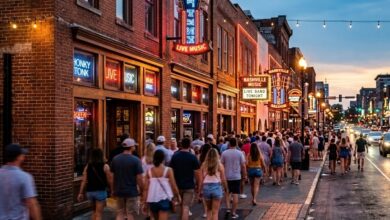
Downtown Nashville is exactly what it promises — loud, bright, relentless, and genuinely fun in a way that large-scale tourist infrastructure rarely achieves. Broadway's honky-tonks run from 10am to 3am with live music every hour, the bars stack four stories high with rooftop views, and the energy on a Saturday night rivals anything in Las Vegas or New Orleans. The hotels here (Omni, JW Marriott, Westin, Loews) are expensive and worth every dollar if proximity to the action is the priority. Walk east past 2nd Avenue to the Nissan Stadium pedestrian bridge and you're on the riverfront, which has its own slower, more scenic character. Downtown is where you should stay for your first Nashville trip.
The Gulch: Upscale and Walkable
The Gulch sits just southwest of downtown, a former rail yard that has become Nashville's most polished mixed-use neighborhood. The streets are clean, the restaurants are excellent (Marsh House, Henley, The 404 Kitchen), and the proximity to the Frist Art Museum and Music City Center makes it a strong base for visitors who want walkability without being directly on Broadway. The “I Believe in Nashville” mural on 11th Avenue has become one of the city's most photographed spots — located in a neighborhood that mostly didn't exist fifteen years ago. Hotels in the Gulch tend to be boutique, expensive, and stylish.
12 South: The City's Most Charming Street
12th Avenue South is what happens when a residential street gradually fills with the right mix of independent businesses: Draper James (Reese Witherspoon's flagship store), White's Mercantile, Frothy Monkey, Josephine Restaurant, and a dozen boutiques that feel carefully curated without feeling pretentious. The street ends at Sevier Park, a neighborhood green space with a farmer's market on Saturday mornings in season. 12 South is best experienced on a weekday — weekend crowds rival Broadway in density, and the neighborhood is narrow enough that it can feel claustrophobic. Stay in 12 South if you want a residential Nashville feel with genuine walkability.

East Nashville: The Creative Heart
East Nashville encompasses several distinct micro-neighborhoods — the Five Points area, Lockeland Springs, Inglewood, and Shelby Hills — all sharing a common character of creative independence and a slight resistance to the city's more polished tourist face. The best restaurants in Nashville are increasingly located here (Butcher & Bee, Lockeland Table, Bar Otaku), the bar scene is more interesting than downtown without the cover charges, and the residential streets are full of Victorian-era homes that survived the urban renewal era intact. Airbnb and VRBO properties here offer more space than comparable hotel rooms for less money. Take the Shelby Street Pedestrian Bridge from downtown to East Nashville on foot — it's a ten-minute walk and one of the best views in the city.
Germantown: Historic and Walking Distance from Everything
Germantown is Nashville's oldest neighborhood, a grid of Victorian commercial buildings and brick rowhouses just north of downtown that has been restored into a restaurant and hospitality destination. Rolf and Daughters, the City House, and Henrietta Red are among the best tables in the city. The Farmers Market on 8th Avenue provides a daily anchor. Germantown is small — a dozen square blocks — but walkable to both downtown and the new Oracle campus development along the Cumberland. It's a quieter, more refined alternative to Broadway-adjacent hotels, with boutique options including the Thompson Nashville.
Midtown: Vanderbilt, Hillsboro Village, and Medical Row
Midtown Nashville bridges downtown and the university corridor, anchored by Vanderbilt University and the Belmont area to its south. Hillsboro Village, centered on 21st Avenue near the Belcourt Theatre, has the city's best movie house alongside good coffee shops, bookstores, and the Pancake Pantry (which has a line on weekend mornings for good reason). The neighborhood is quieter than downtown but has reliable options for food, nightlife, and culture. Hotels here skew toward chain properties serving the medical and business travel market, but rates are consistently lower than downtown, and the #17 bus runs directly to Broadway.