From the Cumberland River to the Lights of Lebanon: The Music City Grand Prix Story
Picture it: an open-wheel IndyCar screaming flat-out across the Cumberland River, the downtown skyline glittering behind it, the honky-tonks of Broadway thumping just a few blocks away. That was the image Nashville gave the racing world in 2021, and it remains one of the most audacious things this city has ever pulled off. The Music City Grand Prix didn't just put Nashville on the IndyCar calendar. It built a brand-new identity around our river, our music, and our nerve.
The Downtown Era: Racing Over a River
When the inaugural Music City Grand Prix launched as a three-day racing-and-music festival on August 6 through 8, 2021, with the main event on Sunday, August 8, it instantly became unlike anything else in the NTT IndyCar Series. The temporary downtown street circuit measured roughly 2.17 miles across 11 turns, but the part everyone talked about was the bridge. Cars roared across the Cumberland River over the Korean War Veterans Memorial Bridge on a straightaway of about 3,578 feet, crossing twice per lap, racing one direction on the way out and the other coming back. No other IndyCar layout in the world raced over a major river. The inaugural event even staged its rolling start right there on the bridge deck.
This was a true music-meets-motorsports concept, pairing wheel-to-wheel racing with multiple concert stages within earshot of Broadway. That first weekend leaned hard into Nashville's home turf, with country names including The Oak Ridge Boys, Brooks & Dunn, Jon Pardi, and Jamey Johnson lighting up the stages between sessions.
A Debut Drenched in Chaos
The racing itself was glorious mayhem. The inaugural 80-lap race, roughly 173.6 miles, produced nine caution periods, two red flags, and a staggering 33 of 80 laps run under yellow. A multi-car pileup at Turn 11 on Lap 20 swept up numerous drivers, and two competitors, Jimmie Johnson and Cody Ware, were disqualified.
Out of that turmoil came a hero. Marcus Ericsson of Chip Ganassi Racing won it, his second victory of the 2021 season, and he did it the hard way. On Lap 4 his car rear-ended a competitor and was briefly launched several feet into the air, an impact that ended Sebastien Bourdais' day with terminal damage. Ericsson clawed all the way back to the front. Behind him, teammate Scott Dixon finished second and James Hinchcliffe took third. Pole-sitter Colton Herta had led 39 laps and looked the part before crashing heavily on Lap 75 while still in contention.
The crowds came in waves: roughly 20,000 on Friday, 30,000 on Saturday, and about 60,000 for Sunday's race, an estimated 110,000 fans across the weekend. Scott Dixon won the downtown race in 2022, and Kyle Kirkwood took the 2023 edition.
Why the Race Moved
Here's the bittersweet twist in the saga: the race that built its whole identity on the riverfront got pushed out by the very ground it raced on. The downtown footprint sat on the parking lots wrapped around Nissan Stadium, exactly where a new stadium for the Tennessee Titans and the East Bank redevelopment would rise. A redesigned downtown course was floated for 2024, one that would have trimmed the layout to seven turns and pushed deeper into the Broadway honky-tonk district. But stadium construction and redevelopment forced a relocation instead.
Beginning in 2024, the Music City Grand Prix moved about 30 miles southeast to Nashville Superspeedway near Lebanon, in Wilson County, the same county as Mt. Juliet. For Wilson County, Lebanon, and Gladeville families, it traded downtown gridlock for a short interstate drive, with tailgate lots, campgrounds, and kids welcome for ten dollars.
The Oval Pays Off
Nashville Superspeedway is a 1.33-mile D-shaped concrete oval with 14 degrees of banking, one of only a handful of concrete racing surfaces in major American racing. It opened in April 2001 and hosted open-wheel racing from 2001 through 2008 before the cars came back in 2024. The venue, which seats about 25,000 permanently and has hosted NASCAR's Xfinity, Truck, and Cup series, is owned by Speedway Motorsports.
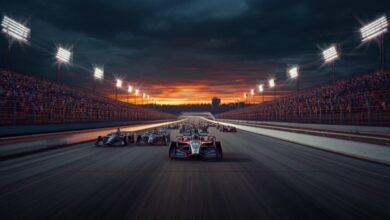
The first oval race, held September 15, 2024, made history as the first time the event served as the IndyCar season finale and championship decider, the 17th and final round, and IndyCar's first oval-format finale in roughly a decade. Colton Herta won it for Andretti Global, his first career oval victory, while Alex Palou clinched the season championship. In 2025, over Labor Day weekend on August 31, the finale returned to the oval and Nashville-area native Josef Newgarden of Team Penske won his home race, his first victory of that season, in a thriller featuring 20 lead changes among 12 drivers and 284 passes for position. With IndyCars topping 200 mph, the door-to-door, lead-swapping racing the banking produces has become its own kind of spectacle.
The 2026 Weekend: Prime Time Under the Lights
The freshest hook yet arrives the weekend of July 18 and 19, 2026, with race day Sunday, July 19, at Nashville Superspeedway. The official event is the Borchetta Bourbon Music City Grand Prix presented by OnlyBulls, the 12th round of the 17-race schedule, and for the first time it finishes under the lights in prime time, airing on FOX following the 2026 FIFA World Cup Final. The headline NTT IndyCar event pairs with the Indy NXT by Firestone support series, plus live music and family activities.
The sponsor thread ties it all together. Big Machine, the Nashville record-label and distillery brand connected to music executive Scott Borchetta, was the original title sponsor, and Borchetta was a driving force in bringing IndyCar here in 2021. In 2025 the entitlement became Borchetta Bourbon, made in Lynnville, Tennessee, from locally grown heirloom red, white, and blue corn, stone-milled on site and 100% copper pot distilled. Penske Entertainment now runs promotion, with Borchetta serving as a liaison to Nashville's entertainment and civic community.
How to Get Tickets
Grab your 2026 seats right here through Nashvegas.com. After the move to the oval, weekend attendance has run around 40,000 to 42,000, so don't wait. As a 2025 benchmark, weekend packages opened at $70, Premium Plus grandstand seats ran $150 with reserved parking and tip-up seats over the start/finish line, kids 12 and under got in for $10 across the full weekend with an adult ticket, and camping started at $200 at the Glade Campground. Hospitality ran through the RPM Club and Champions Club.
Buy Music City Grand Prix tickets through Nashvegas.com »
Tickets are also sold through MusicCityGP.com and the 866-RACE-TIX phone line, but Nashville's own Nashvegas.com is your home for getting in the gate. We'll see you under the lights.