Under the Glass Roof Again: The Arcade’s Next Act Starts with a Farm-to-Table Debut
When the Arcade opened in 1903, more than 40,000 people turned out to see it — somewhere near a third of the county's entire population at the time. Nashville had never had a building like it, and to be fair, it still doesn't. A two-story pedestrian street with storefronts on both levels, open at each end, roofed in a soaring gable of steel and glass. Daniel C. Buntin, the businessman behind it, had taken his inspiration from the Galleria Vittorio Emanuele II in Milan and set about building a version of it in what was then called Overton Alley.
A hundred and twenty-three years later, the Arcade is filling up again — and the tenants arriving under that glass roof are worth paying attention to.
Naked Farmer, first in Tennessee
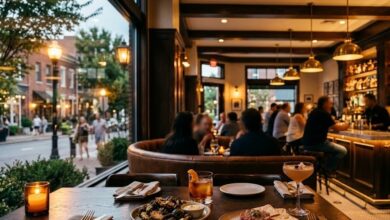
The most recent addition opened quietly in late June at 217 4th Avenue North. Naked Farmer is a farm-to-table concept built on ingredients sourced from family-owned farms in the surrounding region, and the Arcade location is its first in Tennessee — the tenth restaurant in the company overall.
The format is the now-familiar customizable bowl-and-plate model, but the sourcing is where the concept earns its name: dishes are prepared on site, built around high-protein centers like grass-fed steak, chicken, and salmon, with a full run of salads and vegetarian options alongside. The kitchen is entirely seed-oil free, cooking exclusively in avocado oil and extra virgin olive oil — a detail that reads as marketing until you talk to the increasingly large share of diners who now shop specifically for it.
For a lunch-hour location wedged between downtown offices and the tourist corridor, it is a shrewd fit. The Arcade has always lived or died on weekday foot traffic.
And it isn't arriving alone
Naked Farmer is one piece of a broader revitalization. NADC Burger, Whitney's Cookies, and Show Stop are all part of the incoming roster, which gives the building something it has lacked for years: a critical mass of reasons to walk through it rather than past it.
The retail side has been rebuilding too — Faherty opened an Arcade location as part of the same wave. A single new tenant in a historic building is a lease. Four or five at once is a strategy.
Why this building keeps getting second chances
The Arcade has cycled through eras the way downtown Nashville has. It was built in under a year by the Edgefield and Nashville Construction Company, designed by the local firm Thompson, Gibel and Asmus, with the steel bracing for that gabled roof fabricated by the Nashville Bridge Company — an unusually local pedigree for a building modeled on an Italian landmark. Its second-floor wraparound balcony, with the decorative iron grillwork still in place, is the kind of detail that no modern developer would pay to reproduce.
It is listed on the National Register of Historic Places, which protects the shell but does nothing about the vacancy rate. For long stretches the Arcade was better known for its art crawls and its peanut shop than for being a functioning commercial street. What is happening now — a food-and-drink cluster arriving more or less at once — is the version of adaptive reuse that actually works, because it gives people a reason to be in the building at noon on a Tuesday rather than only on the first Saturday of the month.
Making an afternoon of it
The Arcade sits a short walk from Lower Broadway, which makes it a useful reset between honky-tonks — if that's the plan, our complete local's guide to Broadway and beyond is worth a read first.
And if you're building a downtown weekend around it, book your stay here » — staying within walking distance is the difference between seeing downtown and navigating it.
J3 Media may earn a commission from links on this page.
The 1903 crowd came to see a glass roof over a street. The 2026 version is less dramatic, but it's the same basic proposition: come inside, look up, stay a while.